
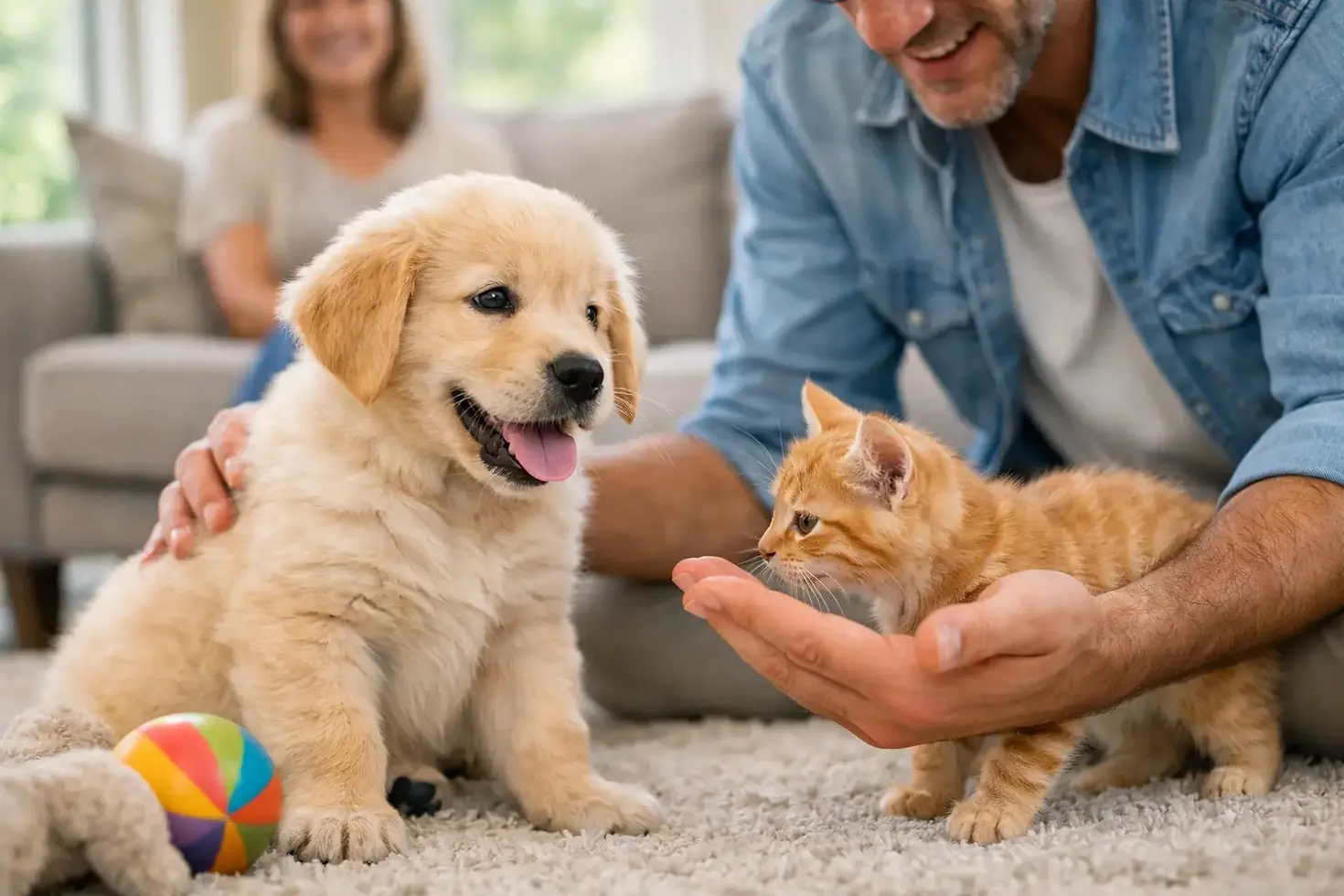
Why Early Puppy Socialization Matters at Home
A puppy who has calmly met the vacuum, heard the doorbell, felt grass under their paws, and enjoyed gentle handling is already learning a big lesson: the world can be safe. That is why early puppy socialization matters so much. It is not about creating the busiest puppy schedule possible. It is about helping a young dog build positive associations with the everyday people, places, sounds, and routines that will shape family life.
For families bringing home a Goldendoodle, Labradoodle, or Double Doodle, early socialization can make the transition from breeder home to forever home feel far less overwhelming. Doodles are often bright, people-focused companions, but intelligence also means they notice a lot. Thoughtful early experiences can help that sensitivity grow into confidence rather than uncertainty.
Why Early Puppy Socialization Matters for Confidence
Socialization is sometimes misunderstood as simply letting a puppy greet every dog and person they see. Friendly introductions can be helpful, but quality matters more than quantity. A puppy who is pushed into a scary interaction, crowded by a group of children, or taken to a chaotic dog park before they are ready may learn that unfamiliar situations are stressful.
The goal is a puppy who can look at something new, take a moment to process it, and feel secure with their people. That confidence supports the behaviors families want most: greeting visitors politely, settling during a car ride, accepting grooming, walking through a neighborhood, and recovering quickly from normal surprises.
A well-socialized puppy is not a puppy who loves every person, dog, or activity. Dogs have individual preferences, just like people do. A successful socialization foundation gives them the ability to handle everyday life without fear, even when they choose to be a little reserved.
The early window is meaningful
Puppies are especially open to new experiences during their first few months of life. Early learning begins long before a puppy joins their new family. Gentle daily handling, normal household activity, play with littermates, new safe surfaces, and kind human interaction all help form a foundation.
This is one reason an in-home environment can be so valuable. Puppies naturally encounter the rhythm of family life: voices, movement, kitchen sounds, doors opening and closing, and moments of rest. At Pawfect Doodles, that home-raised approach is part of preparing puppies to become happy, connected companions.
Once your puppy comes home, the learning continues. The first weeks should be calm and intentional rather than packed with errands and introductions. A few positive experiences each day are more valuable than one exhausting outing.
Socialization Builds Everyday Life Skills
Many future behavior challenges begin with a puppy who simply has not had enough safe practice. That does not mean a loving family has failed their dog. It means the puppy may need patient, gradual support to learn that a new experience is not a threat.
Early socialization helps puppies develop comfort with the practical parts of being a family dog. Think about the moments that will happen repeatedly over a lifetime: a child drops a toy, a delivery truck passes the house, friends come over for dinner, the leash comes out, or the groomer needs to touch their paws.
For doodles, grooming preparation deserves special attention. Their beautiful coats often require regular brushing and professional grooming. A puppy who learns that brushing comes with gentle touch, calm praise, and small rewards is more likely to tolerate those appointments with less stress. Start with short sessions. Touch the feet, look briefly at the ears, lift the tail, and offer a treat before your puppy becomes wiggly or worried.
The same approach works for vet care, nail trims, car rides, and wearing a harness. Keep each introduction brief, positive, and age-appropriate. You are not trying to finish a full grooming routine or take a long road trip on day one. You are showing your puppy that these things predict safety and good outcomes.
Safe Socialization Is Not a Free-for-All
Families often hear that they need to socialize their puppy before vaccinations are complete, then worry that taking them anywhere could be unsafe. The right balance depends on your veterinarian's guidance, your puppy's vaccine schedule, and the disease risk in your area.
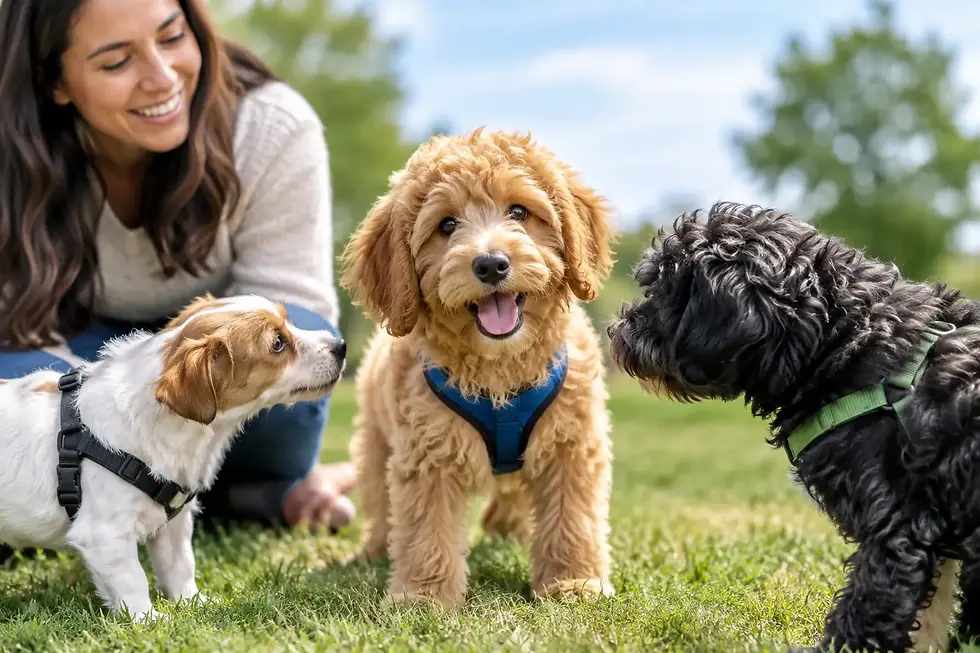
There are many lower-risk ways to introduce the world before your puppy is ready for public dog-heavy spaces. Invite a healthy, vaccinated, puppy-savvy dog to meet your puppy in a clean private yard. Carry your puppy while sitting outside a coffee shop or watching neighborhood activity from a distance. Let them hear traffic from the car, meet a few calm visitors, or explore a clean porch on a warm morning.
Avoid places where unknown dogs may have eliminated, especially before your veterinarian says it is appropriate. Dog parks, busy pet-store floors, and shared apartment dog runs can wait. Socialization should never come at the expense of your puppy's health.
Watch your puppy's body language during every new experience. A relaxed puppy may sniff, take treats, wag loosely, or look around with curiosity. A puppy who freezes, tucks their tail, repeatedly tries to leave, yawns when not tired, or refuses food may be telling you they need more space. Move farther away, lower the intensity, and try again another day.
How to Make New Experiences Feel Positive
The best socialization moments are short enough that your puppy still feels successful. Pair a new sound, person, object, or environment with a tiny training treat, cheerful praise, or a favorite toy. Let your puppy choose whether to approach when possible. Choice builds confidence.
If your neighbors want to say hello, ask them to crouch slightly, turn sideways, and allow the puppy to come to them. Encourage children to use gentle hands and avoid hugging, chasing, or lifting the puppy. A puppy who learns that people respect their space is more likely to enjoy human company as an adult.
Keep introductions varied, but do not chase a checklist. Your puppy does not need to meet fifty strangers in a week. It is better to have a pleasant interaction with a calm older adult, a child who understands gentle handling, someone wearing a hat, and a person using a walker than to experience a loud crowd all at once.
Rest is part of the process, too. Young puppies need plenty of sleep, and an overtired puppy can become mouthy, frantic, or easily startled. After a new outing or visitor, offer quiet time in a comfortable crate, pen, or puppy-safe room. Learning happens when puppies have time to recover.
Socialization Continues After Puppyhood
Early experiences matter greatly, but they are not a one-time assignment to complete by a certain date. Your doodle will benefit from continued kind exposure as they grow. Adolescence can bring a temporary rise in caution or excitement, even in a puppy who seemed fearless at first.
Continue practicing calm walks, friendly greetings, grooming handling, and short trips. A well-run puppy class can offer valuable training and supervised interaction when your veterinarian approves. Look for a class that prioritizes positive reinforcement, clean facilities, and individual space rather than forcing puppies to play together.
If your puppy shows intense fear, persistent reactivity, or signs of distress that do not improve with gentle practice, reach out early to your veterinarian and a qualified positive-reinforcement trainer. Getting support is not an overreaction. It is a caring step that can protect your puppy's well-being and your family's peace of mind.
Your puppy does not need a perfect start to become a wonderful companion. They need patient people, manageable new experiences, and the reassurance that home is a safe place to return to. Each calm car ride, gentle brush stroke, and happy hello adds up to a dog who can share more of life with the family they love.


Comments