

When Can Puppies Leave Mothers? A Safe Timeline
A puppy may look ready for a new family long before they are truly prepared for the transition. So, when can puppies leave mothers? For healthy, responsibly raised puppies, the answer is not before 8 weeks old. That final stretch with mom and littermates plays a meaningful role in building the healthy, happy, confident companion families hope to bring home.
For doodle puppies, whose affectionate nature and people-focused personalities make them such wonderful family companions, a thoughtful start matters. The first eight weeks are filled with feeding, learning, exploring, resting, and gentle social experiences that cannot be rushed.
When Can Puppies Leave Their Mothers Safely?
Puppies should stay with their mother and littermates until they are at least 8 weeks old. In some situations, a breeder may recommend a little more time, especially if a puppy is smaller, needs extra confidence-building, or is still making progress with eating independently and adjusting to new experiences.
Eight weeks is not an arbitrary date on a calendar. By this age, most puppies have fully transitioned from nursing to solid food, gained strength and coordination, and begun learning the social rules of being a dog. They are also more able to handle the excitement of a car ride, a new home, and meeting their new family without becoming overwhelmed.
Bringing a puppy home at 6 or 7 weeks can seem tempting when everyone is excited. Yet early separation asks a very young puppy to leave their source of comfort, routine, and canine instruction before they have had enough time to benefit from it. A responsible breeder puts development ahead of convenience.
Why the Final Weeks With Mom Matter
A mother dog does far more than feed her puppies. As puppies grow, she teaches boundaries through everyday interactions. She may step away when play becomes too demanding, correct overly rough behavior, and show her puppies when it is time to settle down. These small moments help puppies develop frustration tolerance and appropriate manners.
Littermates are teachers, too. During play, puppies discover that biting too hard ends the game. They learn how to read body language, take turns, recover after a tumble, and communicate without fear. This is where early bite inhibition begins, which is especially helpful once those tiny doodle teeth arrive in a family home.
The goal is not to make puppies dependent on their litter forever. It is to give them enough time to become emotionally ready for independence. Puppies that have had a steady, nurturing start are often better positioned to bond with their new families and adapt to household life.
Weaning Should Be a Gradual Process
Most puppies begin exploring softened puppy food around 3 to 4 weeks of age. Over the following weeks, they slowly rely less on nursing and more on regular meals, fresh water, and their own growing confidence. This process should happen gradually, with mom still available for comfort and guidance.
By 7 to 8 weeks, puppies are generally eating independently. A breeder should still watch closely for consistent weight gain, healthy stools, good energy, and a confident appetite. A puppy who is technically old enough but struggling to thrive may benefit from additional time and individual attention.
Socialization Begins Before Homecoming
The socialization window is already open before a family picks up their puppy. Gentle, age-appropriate exposure to normal household sounds, safe handling, new textures, play areas, and caring people can help puppies see the world as an interesting place rather than a scary one.
In-home raising gives puppies opportunities to experience the rhythms of family life. They can hear conversation, household movement, and the everyday sounds that will be part of their next chapter. Socialization is never about overwhelming a puppy. It is about creating positive, carefully managed experiences while respecting each puppy's comfort level.
Is Eight Weeks Always the Right Time?
Eight weeks is the minimum benchmark, not a one-size-fits-all promise that every puppy must leave on that exact day. Healthy development comes first. A puppy may stay longer if a veterinarian identifies a health concern, if the puppy is especially petite, or if they need more support becoming confident away from mom.
Some families also choose to welcome their puppy at 9 or 10 weeks. There can be advantages to this timing, including a little more maturity, continued litter socialization, and extra time for a breeder to observe each puppy's personality. The trade-off is simply that families wait a bit longer to bring home the puppy they already love.
What should never happen is a puppy leaving at 5 or 6 weeks simply because they are weaned or because a buyer is ready. Weaning and emotional readiness are not the same thing. A puppy needs both.
What a Responsible Breeder Completes Before Go-Home Day
Before a puppy joins a new family, careful breeders use the final weeks to make sure each puppy is developing well and receiving the foundation of care they need. That includes routine health attention, monitoring growth, keeping living areas clean, and giving puppies plenty of rest between short periods of play and exploration.
Go-home preparation also includes learning about the puppy as an individual. Even within the same litter, one puppy may be the first to greet visitors while another takes a moment to observe. One may be especially food-motivated, while another prefers toys or cuddles. These early observations can help guide thoughtful conversations about fit, lifestyle, and expectations.
For families looking for a Goldendoodle, Labradoodle, or Double Doodle, temperament is every bit as meaningful as coat color or pattern. A beautiful merle, parti, or tricolor coat may catch your eye, but a puppy's early care, social development, and health should always remain at the center of the decision.
How to Prepare for an 8-Week-Old Puppy
The first days home should feel calm and predictable. Your puppy has left their mom, siblings, familiar smells, and daily routine all at once. A quiet welcome gives them room to settle in and begin trusting you.
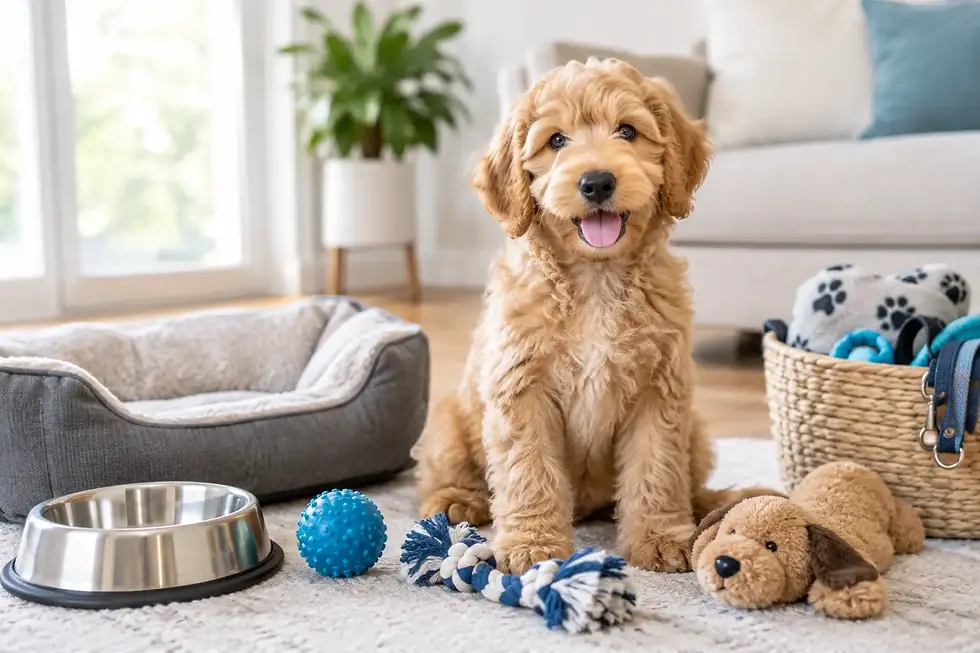
Set up a cozy sleep space, choose a puppy-safe area for supervised play, and have food and water ready before arrival. Plan for frequent potty trips, short positive training moments, plenty of naps, and gentle handling. Young puppies can only take in so much at one time, even when they seem curious and eager.
Try not to schedule a parade of visitors during the first few days. Your friends and family will be excited, but your puppy benefits more from a peaceful introduction to their immediate household. New people, children, and friendly vaccinated dogs can be introduced gradually, with positive experiences and plenty of breaks.
Consistency builds security. Use the same potty area, keep mealtimes steady, and begin simple routines right away. A puppy does not need a perfect schedule on day one, but they do need patient guidance from people who understand that learning takes time.
Signs a Puppy Is Ready for Their New Family
Age is the starting point, but readiness includes several encouraging signs. A puppy ready for home is eating well on their own, maintaining a healthy weight, moving confidently, playing appropriately, and settling down to rest after activity. They should be comfortable with gentle human handling and showing curiosity about their environment.
No puppy is fully trained at 8 weeks, and no caring breeder should suggest otherwise. Accidents, nighttime wake-ups, chewing, and moments of uncertainty are normal. What families want is not a finished dog, but a puppy who has received a strong beginning and is ready to continue growing with them.
At Pawfect Doodles, the joy of go-home day comes from knowing a puppy has had time to be exactly what they should be first: a puppy, safe with mom, surrounded by siblings, and gently prepared for a lifetime of family love.
When your new puppy finally curls up beside you after the trip home, remember that patience is one of the best gifts you can offer. Their world has changed overnight, but with calm routines, kind guidance, and plenty of affection, home will soon feel like theirs.


Comments