

How to Train a Labradoodle Puppy in 30 Days
A Labradoodle puppy can learn a surprising amount before those fluffy paws even seem big enough to fill the hallway. They are often bright, people-focused, and eager to be part of every family moment, but that same enthusiasm can turn into jumping, chewing, and missed potty breaks without a clear routine. If you are wondering how to train a Labradoodle puppy, start with consistency, calm guidance, and plenty of chances to succeed.
The first 30 days at home are not about creating a perfectly obedient dog. They are about helping your puppy feel safe, understand household rhythms, and discover that listening to you leads to good things. A healthy, happy, well-socialized puppy is already bringing a wonderful foundation into your home. Your job is to build on it gently every day.
Start Training on Day One
Waiting until a puppy is “settled in” can accidentally teach habits you will later need to undo. Begin the moment your Labradoodle comes home, while keeping expectations age-appropriate. An 8- to 12-week-old puppy has a short attention span and limited bladder control. Think in minutes, not marathon sessions.
Choose a simple reward marker, such as “yes,” and say it the instant your puppy does something you like. Follow it with a tiny, soft treat, gentle praise, or a favorite toy. This helps your puppy connect the behavior with the reward. Everyone in the home should use the same words for the same actions. If one person says “down,” another says “off,” and a third pushes the puppy away, training becomes confusing fast.
Keep training sessions to three to five minutes, several times a day. A few cheerful repetitions of sit, come, and name recognition around meals or playtime will accomplish more than a long session once a week.
Build a Potty Routine Before Accidents Become a Habit
Potty training is usually the first big concern for new puppy families, and a dependable schedule matters more than any special trick. Take your Labradoodle puppy outside immediately after waking up, eating, drinking, playing, and spending time in the crate. Young puppies also need regular trips between those moments, often every one to two hours when awake.
Bring your puppy to the same outdoor spot, stay quiet, and give one simple cue such as “go potty.” The second they finish, warmly praise and reward them right there. Rewarding after you walk back inside is less clear to a puppy, who may think the treat was for coming through the door.
Accidents will happen. When they do, clean thoroughly with an enzyme-based pet cleaner and move on. Avoid scolding, rubbing a puppy’s nose in a mess, or using a harsh tone. Your puppy will not understand the lesson you intend. They may simply learn to hide when they need to go.
Supervision is your best tool indoors. If you cannot actively watch your puppy, use a properly sized crate, puppy pen, or safe gated area. Freedom should expand gradually as your Labradoodle shows they can make good choices.
Make the Crate a Cozy, Positive Space
A crate can support potty training, safe rest, travel, and calm independence when introduced with care. It should never feel like punishment. Set it up in a family area at first, with comfortable bedding if your puppy will not chew it, safe chew items, and a calm atmosphere.
Begin by tossing treats into the crate and allowing your puppy to walk in and out without pressure. Feed meals near the crate, then just inside it, and eventually with the door gently closed for short periods. Build time slowly. A puppy who is tired after play and a potty break is often more willing to settle.
Some whining is normal during the adjustment period, especially at night. First make sure your puppy has recently gone potty and is comfortable. Then keep your response low-key. Excited late-night play can teach a puppy that crying brings a party. For very young puppies, plan for overnight potty breaks at first and gradually lengthen the time as their bladder control develops.
Teach the Everyday Skills Families Need Most
Labradoodles are known for their intelligent, affectionate nature, which makes positive training especially rewarding. Focus first on practical skills that make life safer and more enjoyable for everyone. Name recognition, coming when called, sit, leave it, drop it, and polite greetings are more valuable early on than a long list of impressive tricks.
For recall, say your puppy’s name followed by “come” in a bright, happy voice when they are already likely to move toward you. Reward generously when they arrive. Never call your puppy to you for something unpleasant, such as ending every fun game or giving a bath. You want “come” to stay one of the happiest words they know.
Jumping deserves early attention because a small doodle puppy can quickly become a larger, bouncy adolescent. When your puppy jumps, quietly turn away and remove attention. The moment all four paws are on the floor, praise and reward. Ask visitors to follow the same plan. Even one person who encourages jumping can slow progress.
Mouthing is another normal puppy behavior, especially during teething. Redirect teeth to an appropriate chew toy. If teeth touch skin, calmly end the interaction for a brief moment. Avoid rough hand games that make it harder for your puppy to understand what belongs in their mouth.
Socialize Thoughtfully, Not All at Once
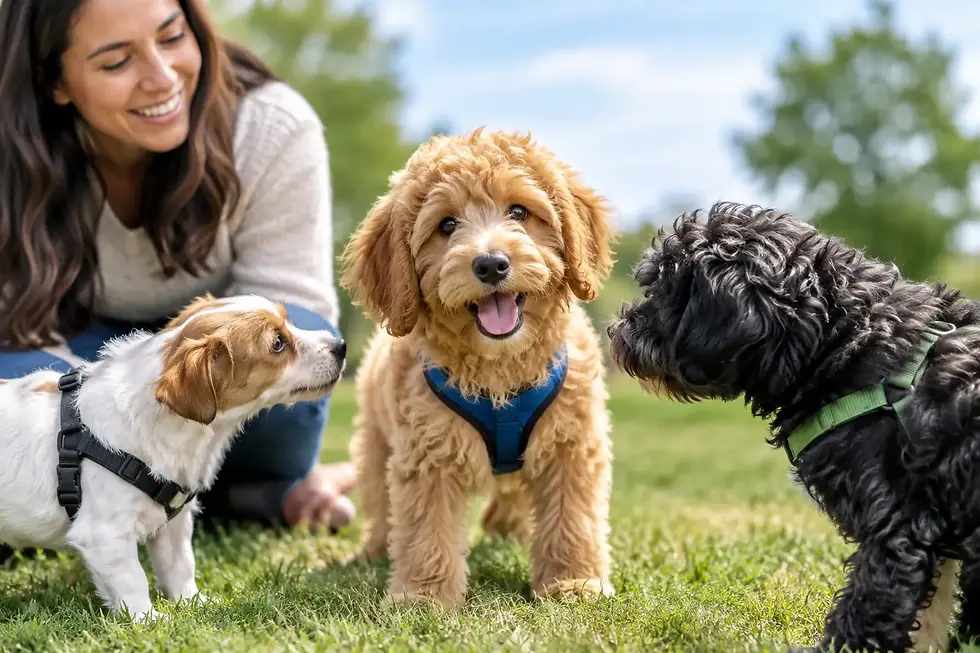
Socialization is not about introducing your puppy to every dog and every stranger in one busy weekend. It is about creating positive, manageable experiences with the sights, sounds, surfaces, people, and gentle dogs they will encounter throughout life.
Offer short, happy exposures to household noises, car rides, umbrellas, hats, children playing at a respectful distance, grooming tools, and different walking surfaces. Pair unfamiliar things with treats and praise. Let your puppy observe without forcing an interaction. A puppy who can calmly watch from a distance is learning just as much as one who says hello.
Be selective about dog encounters. Choose healthy, vaccinated, friendly adult dogs or puppies with good social skills. Ask your veterinarian about safe public outings based on your puppy’s vaccination schedule, especially in areas where many dogs visit. Carrying your puppy, using clean private spaces, or arranging playdates with known healthy dogs can offer safe early exposure while vaccines are still underway.
A well-raised puppy may arrive comfortable with family life, but continued socialization at home is what helps that confidence grow into a steady adult temperament.
Create a Daily Rhythm Your Puppy Can Understand
Puppies thrive when the day becomes predictable. They do not need every minute scheduled, but they benefit from a repeating rhythm of potty breaks, meals, short training, play, naps, and quiet time. Many behavior challenges are really overtired-puppy challenges. Young Labradoodles often need 18 to 20 hours of sleep in a 24-hour period.
A simple day might include a potty trip and breakfast, followed by a few minutes of training and supervised play. Then comes a nap. Repeat that cycle through the day, adding a brief walk or backyard exploration when your veterinarian says it is appropriate. Keep exercise gentle while joints and bones are developing. Several short adventures are better than one long, exhausting outing.
Mental exercise also matters. Scatter part of a meal in the grass, use a food puzzle, practice simple cues, or let your puppy sniff during a slow walk. These activities satisfy an intelligent doodle mind without asking too much from a growing body.
Be Patient Through the Messy Parts
Progress rarely moves in a straight line. Your puppy may sleep through the night for several days, then have an accident. They may know “sit” in the kitchen but forget it when guests arrive. That does not mean training has failed. Puppies learn in layers and need practice in different rooms, around different people, and with more distractions over time.
Avoid punishment-based methods that rely on fear, intimidation, or physical corrections. They can damage trust and may create anxiety around people, handling, or training. Clear boundaries and positive reinforcement are not permissive. You can be warm and still be consistent: redirect unwanted behavior, prevent repeated mistakes, and reward the choices you want to see again.
If your puppy is showing intense fear, frequent guarding, persistent biting, or behavior that feels difficult to manage, ask your veterinarian or a qualified positive-reinforcement trainer for guidance early. Getting support is a caring choice, not a sign that you have done anything wrong.
Your Labradoodle puppy does not need a perfect family. They need a patient one that notices the small wins: the first calm crate nap, the successful potty trip, the tail wag when they hear their name. Those little moments, repeated day after day, are how a beloved family companion learns to feel truly at home.


Comments